
There are no more items in your cart

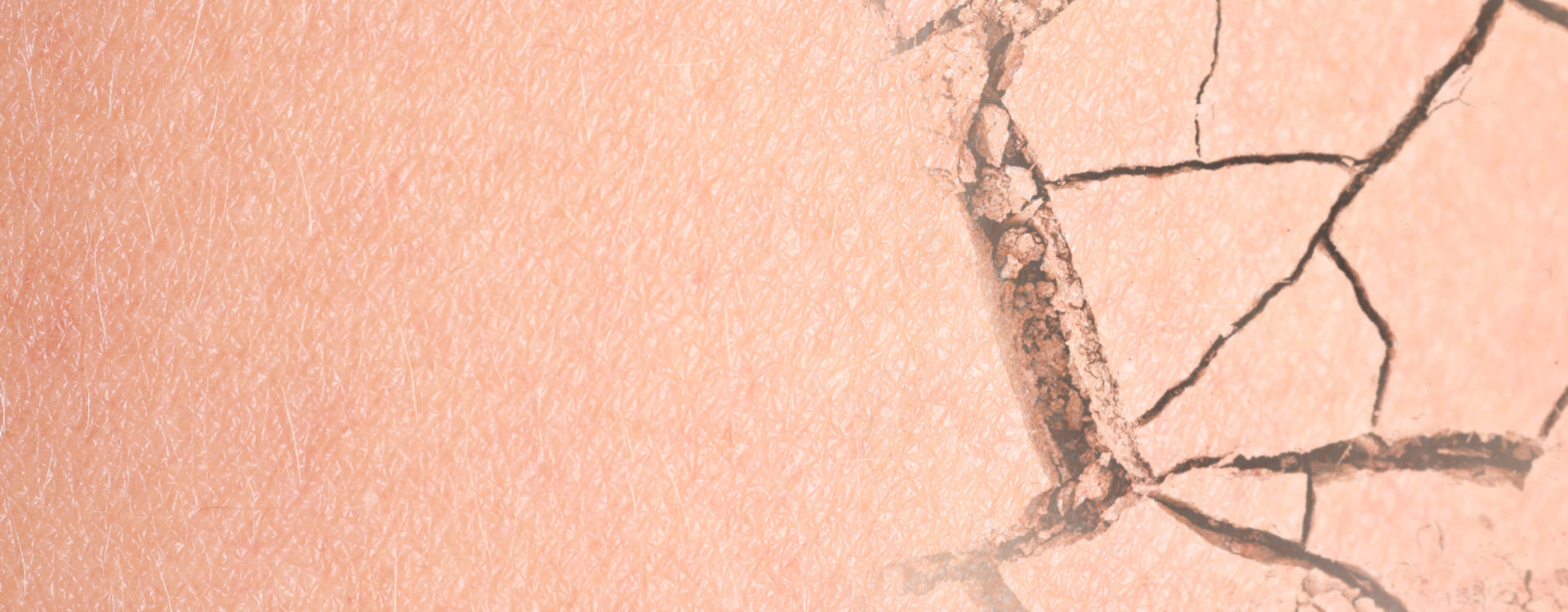
There's a common skincare confusion that keeps circulating: dry skin and dehydrated skin.
Sounds like the same thing, right?
The skin is dry, it's thirsty, tight, flaky, looks tired and somehow not itself. And then you logically think, okay, I need something oily. Or I need more water. Or I need a new cream. Or I need to throw everything out the window and start over.
Simply put:
And yes, you can have both at the same time. Because of course you can. Skin sometimes really likes to complicate things.
Dry skin is most often a skin type. This means your skin is naturally more prone to producing less sebum, or less of its own oil.
Sebum often gets bad PR because we associate it with oily skin, shine, and pimples, but it actually plays a very important role. It helps the skin stay soft, protected, and prevents it from losing moisture too quickly.
When the skin doesn't have enough of these natural lipids, it can look and feel bad:
Dry skin often says Please, feed me.
It doesn't just need water. It needs oils, lipids, emollients, gentler products, and everything that helps it feel more comfortable and protected.
That's why people with dry skin often love richer creams, oils, balms, and gentler cleansing products. Their skin simply doesn't like it when everything is stripped from its surface, leaving it bare and tight.
Dehydrated skin is not necessarily a skin type. It's a condition.
This means anyone can have dehydrated skin: a person with dry skin, combination skin, normal skin, or even oily skin.
And that's where the biggest confusion arises.
You can have oily skin that shines like a pancake cooked in oil, yet is simultaneously dehydrated. It sounds illogical, but skin can be just like that—oily on the outside, thirsty on the inside.
Dehydrated skin often looks like this:
Dehydrated skin says Give me water, but don't leave me alone for that water to escape.
Because hydration isn't just about putting something watery on your face and that's it. The point is to bring moisture into the skin, but also to help it retain it.
If it's easier for you to remember this way:
And if the skin is both dry and dehydrated, then it's both poor and thirsty and hungry. Meaning it needs both hydration and more nourishing care.
And that's often where the problem with products arises.
If you only give very oily products to dehydrated skin, it can still remain thirsty. It might be a little softer on the outside, but that feeling of tightness and fatigue can persist.
If you only give a light hydrating serum to dry skin, it might need a blanket over it. It will get some moisture, but without enough oil and protection, that comfort often doesn't last long.
That's why it's best not to think in terms of I need either hydration or oil.
Often, both are needed, just in different proportions.
Dry skin is usually like that throughout the year, only worsening depending on the season.
In winter, it's often a drama due to cold, heating, and wind. In summer, the sun, sea, air conditioning, sweat, more frequent showering, and outdoor exposure can additionally torture it.
If your skin is almost always prone to tightness, flakiness, and roughness, you most likely have dry skin or at least parts of your face/body that are dry.
With dry skin, you often feel that light creams disappear in a second, as if you hadn't applied anything. The skin drinks them up, says thank you, and in half an hour asks for more again.
This is a sign that it needs richer care, not just light hydration.
Dehydrated skin often appears in phases.
Maybe you don't usually have dry skin, but suddenly you notice that your face looks tired, foundation doesn't sit well, your skin feels tight after washing, but still gets oily throughout the day.
This often happens in summer because we have a perfect little chaos: air conditioning indoors, heat outside, sweating, sea, pool, more showering, less sleep, less water, more coffee, a little stress because everything is burning, and you're trying to function normally as an adult.
Dehydrated skin often doesn't necessarily demand the oiliest cream in the world. It first needs moisture. Ingredients that bind water, like hyaluronic acid, glycerin, and similar hydrating ingredients.
But after that, it also needs something to help that moisture stay in the skin. Because if you only apply hydration and don't lock it in with anything, the skin can again remain tight and unsatisfied.
Yes. And very often.
This is perhaps the most important part for everyone who thinks they don't need hydration because their skin is oily.
Oily skin can have excess sebum, but a lack of water. These are two different things.
That's why it can happen that the skin is shiny, but at the same time feels tight. Or that it gets very oily because it's irritated, over-cleansed, dried out by aggressive gels, and constantly trying to compensate for what it lacks.
If we treat oily but dehydrated skin as if it were only oily and problematic, we often dry it out further. And then it becomes even more agitated.
Oily, dehydrated skin usually responds better to light hydration, serum, gel-like or lighter creams, not necessarily heavy layers of oil.
So the goal is not to make the skin oily. The goal is to restore its balance.
Summer is beautiful, but for the skin, it can be a small circus.
First, there's the sun. I won't lecture about SPF again because we're all a bit tired of it, but the sun and heat can definitely cause the skin to lose moisture and look exhausted.
Second, air conditioning. Air conditioning saves nerves, sleep, and the will to live, but the air in an air-conditioned space can be dry. The skin feels it, especially if you're indoors for hours.
Third, the sea and pool. We love them, but salt and chlorine can further dry out the skin. That's not a reason not to go to the sea, of course. That would be a tragedy. It just means the skin needs a little tenderness afterward.
Fourth, we shower more often. In summer, we shower constantly because we're sticky, sweaty, salty, dusty, or just mentally need a reset. But too frequent showering, very hot water, and aggressive gels can strip the skin of what little natural protection it has.
And fifth, we often drink less water than we think. Or we drink coffee, juices, something icy, something delicious, but the body and skin still crave plain water and a normal rhythm.
People often think dry skin is a winter problem. And yes, winter is the queen of dry skin. But summer can also be quite rude.
If you have dry skin, in summer it can be additionally tortured by the combination of sun, sea, showering, and lighter care.
Because what do we often do in summer?
We put away all richer creams because it's hot. We don't moisturize our body because we don't feel like it. We shower multiple times a day. We use lighter products. And then we wonder why our skin is dry, rough, and somehow lifeless.
Dry skin doesn't go on vacation just because it's 35 degrees outside. It still needs care, just perhaps in smarter, lighter layers.
Dehydrated skin first needs hydration.
This means products that help the skin attract and retain water. Hydrating serums and light creams with hydrating ingredients are great here.
If skin is dehydrated, a good approach is:
This is where the hydrating duo makes perfect sense, especially if the skin feels thirsty, tired, and tight. The serum is there to give the skin that first sip of hydration, and the cream makes everything more comfortable and ensures hydration doesn't disappear in five minutes.
The point is for the skin to get moisture and softness, but still be able to breathe normally and live its summer life.
Dry skin needs more nourishment.
This doesn't mean you need to put a handful of butter on your face and pray it absorbs. But it does mean that dry skin will often respond better to richer textures, oils, nourishing creams, and gentler cleansing products.
With dry skin, it's very important not to start wrong already in the shower.
If you shower with aggressive gels that squeakily clean the skin, you might feel clean, but the skin often remains stripped and tight afterward. Here, shower oil can be a wonderful thing because it cleanses, but doesn't leave that feeling that you've stripped both your skin and soul.
For the face, dry skin often likes something richer in the evening. A nourishing night cream with peptides fits in beautifully here, especially if the skin demands a little more care, softness, and comfort overnight.
Night is a great time for such care because you're not battling with makeup, sun, and sweat. You just apply it, lie down, and let your skin recover a little.
Welcome to the club.
This is a very common combination, especially in summer or during transitional periods.
If the skin is both dry and dehydrated, then it needs both water and oil. First hydration, then more nourishing care.
The simplest way:
If you use the hydrating duo, it can be the base for daily care when the skin needs freshness, moisture, and a lighter feel. And the nourishing night cream with peptides can be a more serious evening step when you feel your skin needs more nourishment and comfort.
For the body, shower oil is often the first smart step, especially if the skin on your legs, arms, or shoulders is dry, flaky, or tight after showering.
Because care doesn't start only when you leave the bathroom. It starts with what you wash yourself with.
This is not a scientific test, but it can help.
If your skin quickly feels tight after washing, often flakes, is rough, and constantly asks for richer creams, it's probably dry.
If your skin looks tired, wrinkled, fine lines are more pronounced, foundation doesn't sit well, and your face might still get oily, it's probably dehydrated.
If you have both, don't be surprised. Skin is not always simple. Neither is life.
First: don't wash it too much.
I know, it's summer, we sweat, everything is sticky, and one would most gladly shower seven times a day. But skin doesn't like it when we constantly scrub it, lather it, degrease it.
Second: don't use water that's too hot.
Hot water sounds wonderful in theory, but it often doesn't help the skin. Especially if it's already dry, sensitive, or dehydrated.
Third: don't skip skincare just because it's summer.
You don't have to have a heavy ritual in summer. But something basic really makes sense. Hydration, gentler cleansing, a lighter cream during the day, more nourishing care at night if needed.
Fourth: don't expect one product to solve everything.
Sometimes you just need to change the order. Sometimes you need to add a serum. Sometimes you need to replace an aggressive shower gel with a gentler product. Sometimes you need a richer night cream. And sometimes you just need to stop mistreating your skin and give it three days of peace.
If you don't want your shelf to look like a small laboratory, I completely understand.
A routine can be completely simple.
Morning:
gentle cleansing or just rinsing + hydrating serum + hydrating cream
Evening:
cleansing + hydrating serum + cream
If skin feels tight but isn't very dry, this approach is often sufficient.
Morning:
gentle cleansing + cream that provides comfort
Evening:
non-drying cleansing + hydration + more nourishing cream
For body:
shower oil or gentler washing product + post-shower care
Morning:
hydrating serum + hydrating cream
Evening:
serum + nourishing night cream
For body:
do not dry out skin in the shower and do not wait for it to start cracking from dryness before moisturizing it
Dry and dehydrated skin are not the same thing.
Start simply.
Skin usually doesn't ask for drama.
Just a little water, a little food, and a little less mistreatment.
And really, don't we all ask for the same?


Prezzo più basso negli ultimi 30 giorni: 8,78 €
Prezzo al 02.05.2025.: 6,63 €


 Damaged skin barrier: how can you tell you've overdone your skincare?
Your skin feels dry even though you moisturise all the time? Here's why.
Why does your skin feel tight as soon as the heating goes on? An autumn routine in three steps
From 1 to 11 October we are taking a short holiday
Why Does a Single Scent Take Us Back to Childhood in a Second?
Damaged skin barrier: how can you tell you've overdone your skincare?
Your skin feels dry even though you moisturise all the time? Here's why.
Why does your skin feel tight as soon as the heating goes on? An autumn routine in three steps
From 1 to 11 October we are taking a short holiday
Why Does a Single Scent Take Us Back to Childhood in a Second?