
There are no more items in your cart

One balm in your bag, another in the drawer, a third on the bedside table. You put it on so often that you no longer notice when you do it. Your lips feel soft for a minute. Then they feel tight again, and in the corner that tiny crack opens up, the one that stings as soon as you bite into a mandarin.
Something doesn't add up here.
Lip balm isn't a magic wand. When your lips crack despite it, the reason usually lies in what you do alongside it, in what's inside it or in the air around you. Let's go through it one by one.
The red part of your lips is where the skin turns into the lining of the mouth. The stratum corneum, the outer protective layer, is thin there, and underneath it there are neither oil glands nor salivary glands. The skin on your cheeks makes a little oil of its own to protect itself. Lips can't do that.
Japanese dermatologists actually measured this. In winter they compared the lips and cheeks of 303 women. The lips lost almost three times more water than the cheeks, and their surface held roughly a third of the moisture found in the cheek. The culprit is the surface of the lips, which doesn't form a fully developed protective layer like the rest of your skin.
That's why lips are the first to suffer when it turns cold, when the wind picks up or when you turn on the heating. And that's why they need more protection than the rest of your face.
Your lips feel tight and your tongue moves on its own. For a moment it's better, because they're moist.
And then it isn't.
Saliva evaporates quickly, and your lips are left drier than before. The American Academy of Dermatology (AAD) lists licking among the causes of dry, chapped lips. The dermatology site DermNet also describes the cycle this sets off: constant wetting and drying weakens the lips' protective barrier, the lips become inflamed, and inflamed lips make you want to lick them even more. Redness and flaking then often spread to the skin around the mouth, exactly as far as the tongue reaches. DermNet writes that this is most often seen in school-age children, but it can happen at any age.
The same goes for biting your lips and picking at the skin. The AAD says this irritates the lips and can keep them from healing. It also mentions a habit few people connect with their lips: holding metal objects between them, such as paper clips or jewellery.
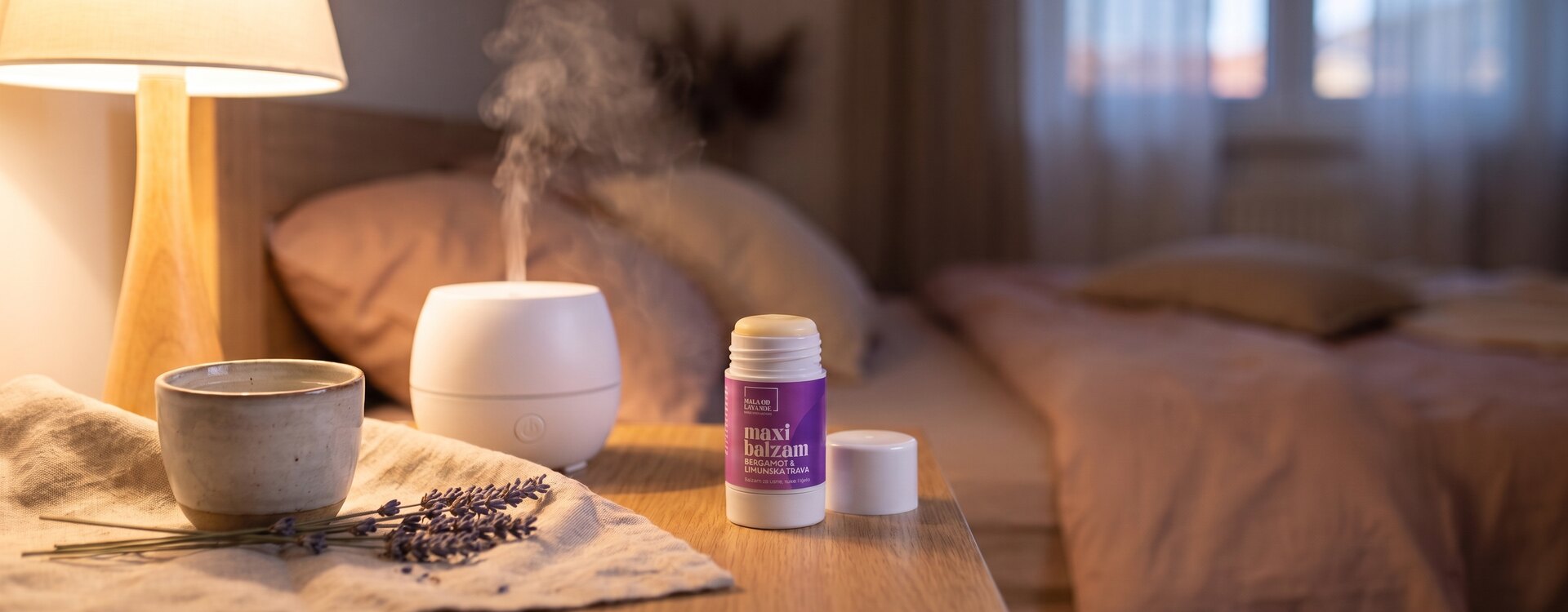
Licking is a hard habit to break because it happens without you noticing. The AAD suggests a simple swap: when you catch yourself licking your lips, apply lip balm instead. For that you need the balm within reach, not at the bottom of your bag. We made our Maxi balm big precisely so you can find it with your eyes closed.
Some lip balms cool, sting or tingle on the lips. It's easy to think that's a sign they're doing something.
The AAD says the opposite: burning, stinging and tingling mean your lips are being irritated. While your lips are chapped, it advises avoiding products with camphor, eucalyptus, menthol, phenol and salicylic acid. The same list includes cinnamon, citrus, mint and peppermint flavours, fragrance, lanolin, the UV filters octinoxate and oxybenzone, and the preservative propyl gallate.
If your lips burn after you apply a balm, that product isn't right for them, however long you've been using it.
Here I have to be honest about my own product too. Maxi balm has no menthol, camphor or salicylic acid, but it does have a citrus scent from bergamot and lemongrass essential oils. If your lips are badly chapped and sensitive, choose something completely fragrance-free until they heal, for example our shea butter. I wrote about when fragrance in cosmetics is a problem and when it isn't in my article on whether fragrance-free cosmetics are really better.
Lip gloss, lips wet from your tongue, a balm that cools. All of these can make your lips feel better straight away. That feeling tells you nothing about whether they'll hold on to moisture.
Lips need a layer that stays on them and slows down water loss. Waxes, butters, oils and ointments give that kind of layer. Among the ingredients that help healing, the AAD lists, among others, shea butter, castor oil, hemp seed oil, ceramides and petroleum jelly. For very dry, chapped lips it recommends a thick ointment, because it holds in moisture longer than waxes and oils.
Maxi balm is a short formula of sunflower oil, beeswax and vitamin E, without a drop of water. Beeswax forms a thin protective layer on the lips, and the oil softens them. It helps most when you apply it regularly, not only once your lips are already cracking.
Outside there's cold and wind, inside there's the radiator. The air in a heated home is dry in winter, and lips have no oil of their own to defend themselves with.
Night is a story of its own. If you sleep with your mouth open, because of a blocked nose or out of habit, air passes over your lips all night long. That's why the AAD advises a humidifier in the bedroom, especially for people who breathe through their mouth at night. It also advises drinking enough water.
Heating doesn't only dry out your lips. I wrote about what it does to the skin on your whole body in why your skin feels tight as soon as the heating goes on, and about winter care for your face and lips in my guide to dry skin in winter.
According to the AAD, with care like this, dry and chapped lips usually improve visibly within two to three weeks. If that doesn't happen, see a dermatologist. Lips that won't heal can be a sign of an allergy, a fungal infection or something more serious, such as actinic cheilitis, a change in the lips caused by years of sun.
Cosmetics care for and protect. They don't cure.
When your lips crack even though you keep putting balm on them, it usually comes down to your tongue, ingredients that irritate them and dry air. Lip balm helps when it stays on your lips as a thin protective layer, when you apply it before something dries them out, and when you stop licking your lips as well.
Sometimes the best change is also the smallest: lip balm in your pocket, not at the bottom of your bag.


 Retinol, peptides, PDRN: do you need everything that's trending right now?
Why is your face cream pilling? It isn't necessarily the cream's fault.
A 10-step skincare routine: does your skin really need that many products?
Is fragrance-free skincare really better for your skin?
Hyaluronic acid not enough? What really keeps your skin hydrated?