


There are no more items in your cart

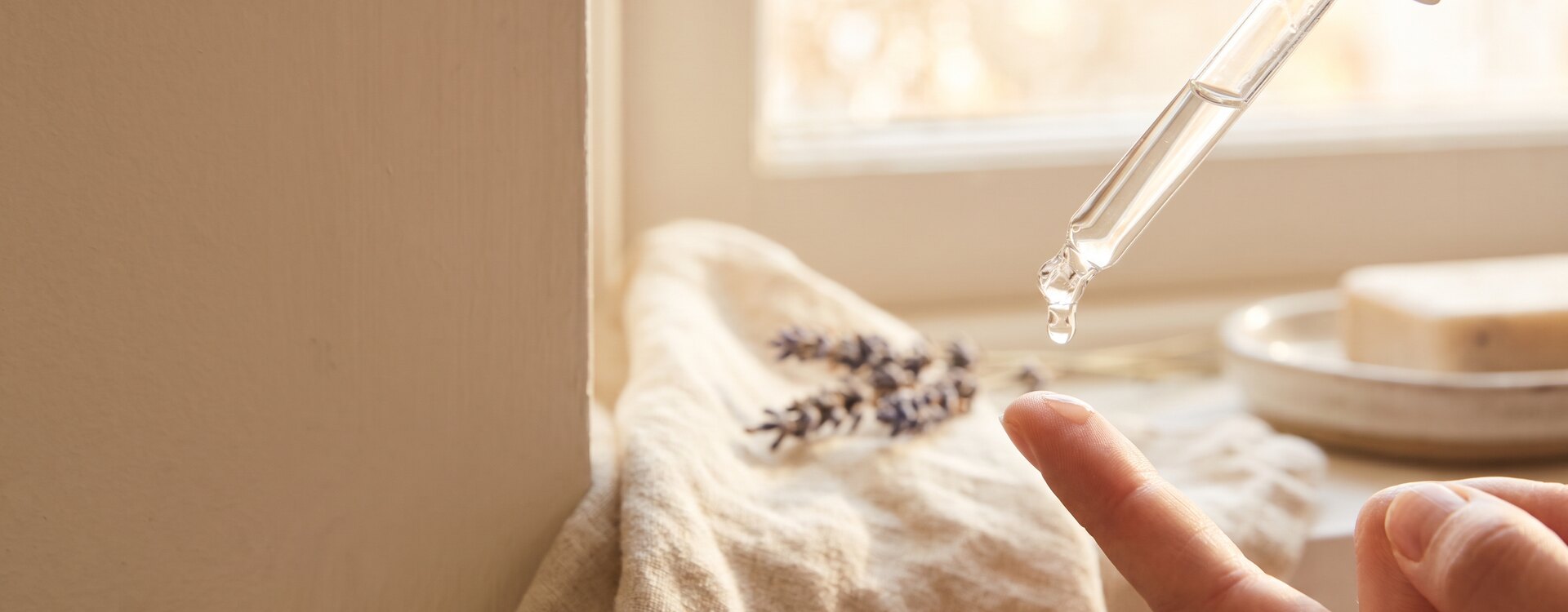
You buy a hyaluronic acid serum because everyone loves it. For the first few days your skin feels plump and smooth, just like the box promised. Then the heating goes on, the air in the flat turns dry, and your face starts to feel tight. Maybe even tighter than before the serum.
And so you decide the serum is no good.
Usually there is nothing wrong with it. It simply does what it does, and nothing more. Hyaluronic acid is an excellent ingredient, but no single ingredient keeps moisture in your skin. The whole formula does.
Hyaluronic acid occurs naturally in our skin. In cosmetics it is most often used as sodium hyaluronate, so that is the name to look for in the ingredient list: Sodium Hyaluronate, or Hyaluronic Acid. You will often read that it holds up to a thousand times its own weight in water.
Whether or not that number is accurate, the job of hyaluronic acid is clear: it attracts water and holds it in the upper layer of the skin. That is why skin looks plumper and smoother after using it.
But hyaluronic acid does not seal the skin. It draws water in, and it does not care where that water goes afterwards.
Ingredients that attract water are called humectants. A 2017 review of moisturisers (Purnamawati and colleagues) describes how they work: they pull water from humid air and from the deeper layers of the skin towards the surface.
When the air is humid, all is well. When it is dry, as it is in a heated flat in winter, the water comes mostly from the skin itself. If there is nothing on top of the serum, that water easily evaporates from the surface. The same review notes that humectants on their own can even increase water loss from the skin, which is why they need to be combined with something that holds the water in.
A magnet without a lid.
That does not mean hyaluronic acid is bad or that it dries out your skin. An article on hyaluronic acid myths, reviewed by dermatologist Corey Hartman, explains that this happens mainly when hyaluronic acid is used alone, on dry skin and in very dry air. In a routine where a cream with oils goes on top, there is nothing to fear.
Good hydrating care has three jobs. I have already written about them in the post about skin that stays dry even though you moisturise all the time, so here is the short version:
Occlusives are the best at holding water in, and the strongest of them is petroleum jelly. The same review states that at a concentration of just 5% it reduces water loss from the skin by more than 98%. But they are heavy and greasy, so few people enjoy them on their face every day.
That is why balance matters in a face cream. A little water, a little oil, something that holds, without your face feeling as if it has been spread with butter.
Our skin produces its own oil, sebum. About 13% of the lipids on the skin's surface are squalene, according to a 2009 review by Huang and colleagues. Squalane, the subject of this section, is its close relative.
Squalene has one weakness: it oxidises quickly in air and sunlight. When squalene is saturated with hydrogen, it becomes squalane, a stable form that does not go rancid in the bottle. It can be obtained from olive oil or by fermenting sugar cane.
Squalane is an emollient. It absorbs quickly, does not leave a heavy greasy film and fills the tiny gaps on the skin's surface. It is not petroleum jelly and does not seal the skin the way wax does, but it is a good partner for hyaluronic acid: one brings the water, the other helps keep the skin soft and stops that water from disappearing too quickly.
The front of the bottle usually names one ingredient, the one that sells well. The real story is on the back, in the ingredient list.
Under European Union rules, ingredients are listed in order of weight, from the one present in the largest amount to the one present in the smallest. Ingredients making up less than one percent may come at the end, in any order.
So there is no need to worry when hyaluronic acid is near the end of the list. It is used in small amounts, and even so it hydrates the skin. What matters far more is what surrounds it. Is there anything else on the list that attracts water, such as glycerin or urea? Are there oils, squalane or butters? Is there anything that will hold moisture in while the heating is on?
A serum that just says “hyaluronic” and contains nothing but water and a preservative will do half the job. The other half has to be done by whatever you put on top of it.
That is how the face products in our workshop are put together too. Our hydrating face serum is based on aloe vera juice, with glycerin, panthenol and hyaluronic acid, and it is fragrance-free. It is the first step.
The hydrating cream with hyaluronic acid and squalane does both jobs at once: it contains hyaluronic acid, glycerin and urea, which attract water, while squalane and African marula oil keep the skin soft. For the evening, when your skin needs richer care, there is the nourishing cream with peptides, with the same pair of hyaluronic acid and squalane in a thicker texture.
Hyaluronic acid does not have to be the star of your routine. It just needs good company.
All of this applies to skin that is thirsty. If your skin cracks, bleeds or itches badly and does not calm down even with regular care, that is a job for a dermatologist, not for a new bottle of serum.
For everyone else there is one simple rule. Hyaluronic acid is a good player, but it does not play alone. Next time you pick up a bottle, turn it around and see who else is on the team.
 Damaged skin barrier: how can you tell you've overdone your skincare?
Your skin feels dry even though you moisturise all the time? Here's why.
Why does your skin feel tight as soon as the heating goes on? An autumn routine in three steps
From 1 to 11 October we are taking a short holiday
Why Does a Single Scent Take Us Back to Childhood in a Second?