Hrvatski
There are no more items in your cart


How many times have you heard about hydrosol and macerate, but weren't really sure what's what?
Some think it's the same thing, some think plants are boiled in water, and some think it's something very complicated.
But the truth is much more beautiful, simple and logical, yet also a bit magical.
For example...
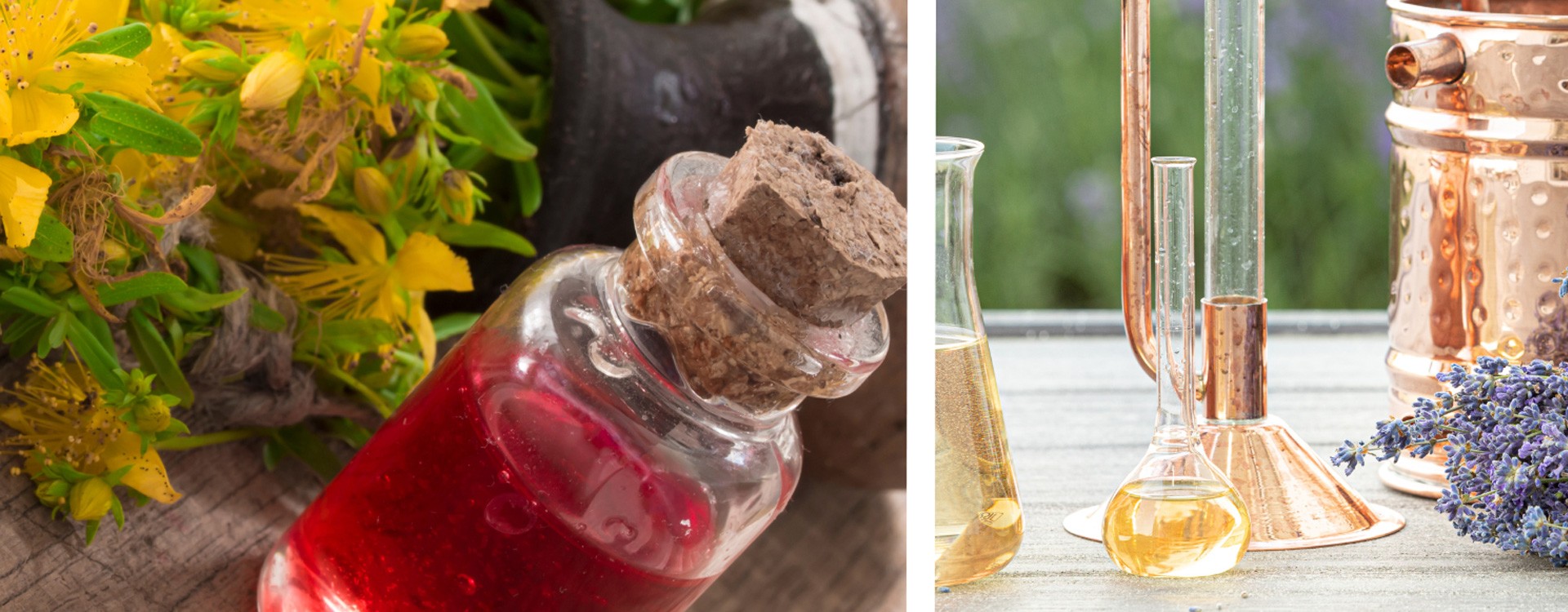
Freshly picked lavender flowers are placed in a large copper or stainless steel kettle.
The kettle is divided into two parts: water at the bottom, plant material above it in a special chamber.
The water is heated and begins to boil.
Steam rises from the boiling water. This steam passes through the lavender flowers and along the way "picks up" all the volatile, aromatic, and healing molecules.
But the story doesn't stop there.
The steam, full of the plant's fragrance and energy, goes into a spiral tube, called a condenser.
This spiral tube is submerged in cold water or surrounded by a cooling system.
That's exactly where the magic happens: the steam cools and turns back into liquid.
At the end of the spiral, drop by drop, distillate begins to flow into a container.
In this liquid, we get two components:
essential oil – light and oily, collects at the top
hydrosol – aromatic water, collects at the bottom
And that's what I'm talking about: hydrosol is not "ordinary water" nor a byproduct, but a real plant essence dissolved in water. Gentle, safe, and full of tiny, soluble compounds that essential oil doesn't contain.
That's why you can use it without fear: directly on skin, hair, on your pillow, even on children and babies. Hydrosol is, actually, the gentlest form of aromatherapy.
Now let's move to macerate, a completely different story.
Imagine a jar full of fresh or dried calendula flowers. You pour quality plant oil over them, say olive or almond. You close the jar and put it in a warm place.
Days pass, and the plant slowly releases its pigments, vitamins, and fatty compounds into the oil. The oil, which was plain and ordinary, changes color, scent, and becomes alive.
After a few weeks, you strain it and there it is, ta-daa, macerate: oil enriched with the power of the plant.
Macerates are used in creams, balms, massage oils, or simply on their own, directly on skin.
They nourish, regenerate, and protect skin – all thanks to the plant that "rested" in oil for months.
Now that you know the processes, it's easy to tell them apart:
Hydrosol is created through steam, distillation, and cooling in a spiral tube.
Macerate is created through patient soaking of plants in oil.
One gives a light, aromatic water.
The other gives a rich, nourishing oil.
One refreshes and soothes.
The other nurtures and feeds.
The most beautiful thing is that they complement each other: spray your face with hydrosol, then put a few drops of macerate on still-damp skin. The result? Skin gets both moisture and nourishment, a natural duo that industrial cosmetics can hardly beat.
????
Hydrosol is the soul of the plant captured in water, thanks to steam and a spiral tube submerged in cold water.
Macerate is the strength of the plant transferred into oil, thanks to time and patience.
Two different processes, two different textures, but both are simple and brilliant.
And when we get to know them, we also know how to use them, each for the right purpose, with even more love and respect for nature.
Try macerating at least, anyone can do it.
You don't have to buy everything, there's a special joy in making something yourself ;)